Navigate Reflection

Standard B: The online teacher understands and is able to use a range of technologies, both existing and emerging, that effectively support student learning and engagement in the online environment.


Standard I: The online teacher demonstrates competency in using data from assessments and other data sources to modify content and to guide student learning.

Standard K: The online teacher arranges media and content to help students and teachers transfer knowledge most effectively in the online environment.

Answer in a complete paragraph response: How has the Navigate module prepared you to meet each standard listed above? Link to or provide specific examples from your work in Navigate. What strategies will you take away from the Participate module and apply to your teaching?  What lessons were most beneficial for you?

The Navigate Module helped me prepare for Standard B be working on Navigate 3: LMS Reporting because I found the most relevant tool was the collaboration amongst peers. The involvement with their peers is something that definitely keeps students engaged.

The Navigate Module helped me prepare for Standard I by working on Navigate 3- LMS Tool Categories because I understand the data that the gradebook provides including the reports you can gain from it. This will help guide instruction and the creation of assessments.

The Navigate Module helped me prepare for Standard K by working on Navigate 3: Course Creation within an LMS by practicing uploading content for a course shell and Navigate 1 – Screen Capture by practicing creating a screen captured lesson. Both skills will be invaluable to online teaching.

Navigate 1 – Screen Capture

Explore: Try-out a screencasting tool of your choice.  

Create: Create a screen capture sample lesson (under 2 minutes) in which you explain a educational concept for students.

Artifact: Post a link to your screen capture sample lesson in your blog. Please be sure this is publicly available to view with no sign-in required.

Answer: How does screen capture function in the online classroom? How would the integration of screen capture modify teaching methods?

Screen capture is a great way to talk someone through something and would be very good for students to see something a second time. After a “live session” I could see putting this up so they can go back and use it s a refresher. Pardon the first try at this strategy, I will get better at it!

Navigate 1 – Synchronous Vendor Market

Explore: Select one of the synchronous vendor applications listed in this lesson. Try-out the application.  Think about how you would use this application to host a live lesson with students.

Answer: What synchronous vendor application/tool did you select? Using the application, what did you experience using the synchronous learning tool? Was the task easy? Challenging? Did the process present problems? Document the responses and general reflections on synchronous learning and the recorded session in your blog.

I have used Google Hangouts in the past for personal use. I can imagine it being easy and helpful to use with students, since it is free as part of a gmail account. If a student does not have a gmail account it is simple to sign up for one and have access to this as well as many other features. The only challenges one would experience is you must add people to you contact before you can access them in google hangouts.

This would be a valuable tool for synchronous learning as is would give the student and instructor access to each other as they would both be logged on at the same time and be able to have good conversation.

Navigate 1 – Commercial vs. Open Source Virtual Classrooms

Reflect: Consider for a moment the role of synchronous learning in the virtual classroom and the exploration of various synchronous applications. Using the lesson as a point of reference, discuss the strengths and weaknesses of the open source versus commercial software in relation to synchronous learning in your blog

Answer: When would an open source application take precedence over a commercial product? What are the issues when choosing between Open Source vs. Commercial Software?

The strength of open source in synchronous learning is that everyone has access and it does not cost money. The weakness is that there is no help for troubleshooting for problems. The strength of commercial software is that there are constant updates and if something goes wrong there is help. The weakness is the cost, not every student may have access to it if you have to pay extra for the service.

An open source application take precedence over a commercial product in the following instances: a digital learning community could require membership to use an open source; many groups might use open sources when there are no funds for commercial software.

The issues when choosing between Open Source vs. Commercial Software often deal with the features offered. Many sites are free up to a point and tools beyond that you must pay for. Also, an open source has minimum customer service, so if you are looking to get help, this choice is not for you.

Navigate 3 – Course Creation within LMS

Explore: After selecting and downloading a trial LMS, create a course shell and make note of the various tools available.

 Create: Then, select content to upload to the course shell. To assist with this process, please refer to the content material delineated below.

Answer: While the content loads, note the steps completed to fully load the package and make it viewable. What were those steps? Is it important to follow these steps? Write a description of the experience in your blog.

I made a course shell in Moodle and then began to upload content. I first had to turn the editing on and located the area where I want the content to appear. I clicked the section title and then clicked add an activity. I selected the folder I wanted and clicked add. This was a zip file so next I unzipped it, and to make sure students get the whole file, I click show download folder button. Then all I had to do was click save.

It is important to follow these steps to make sure material is accessible to students.

Navigate 2: Roles: Learning Management System and Student Information System

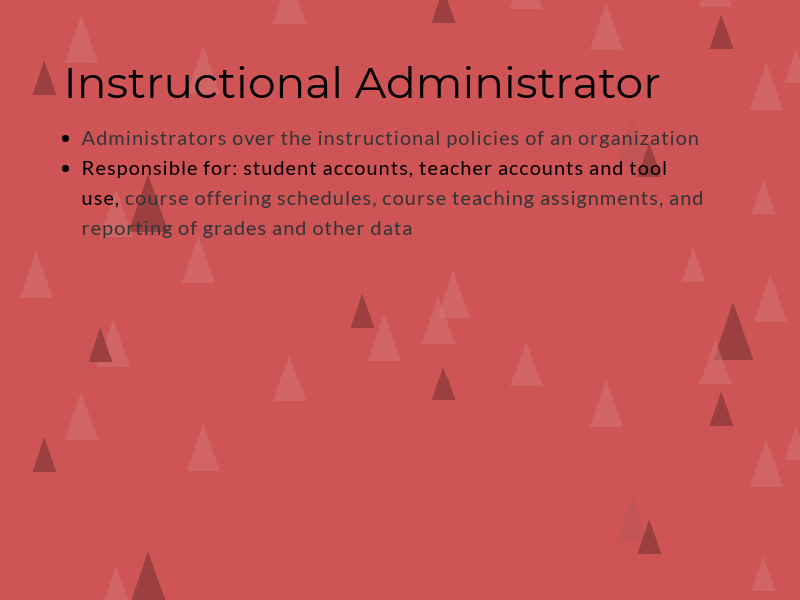
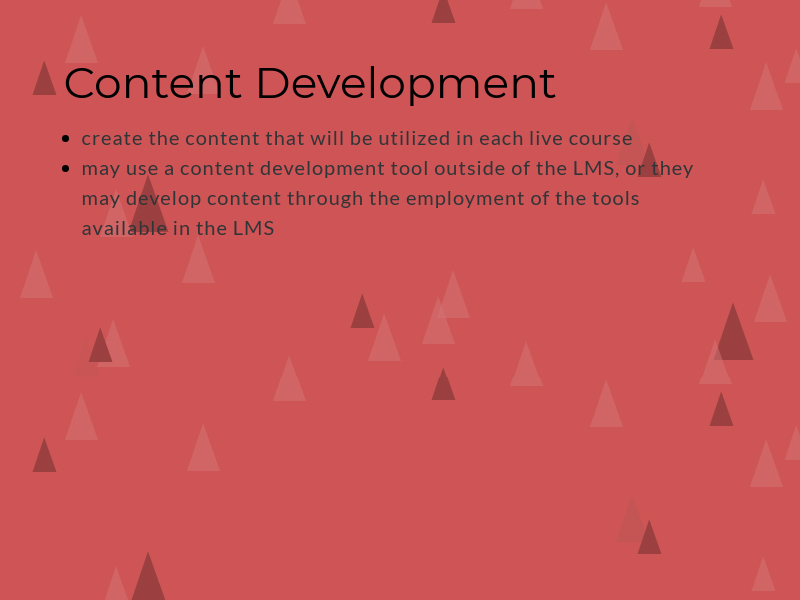
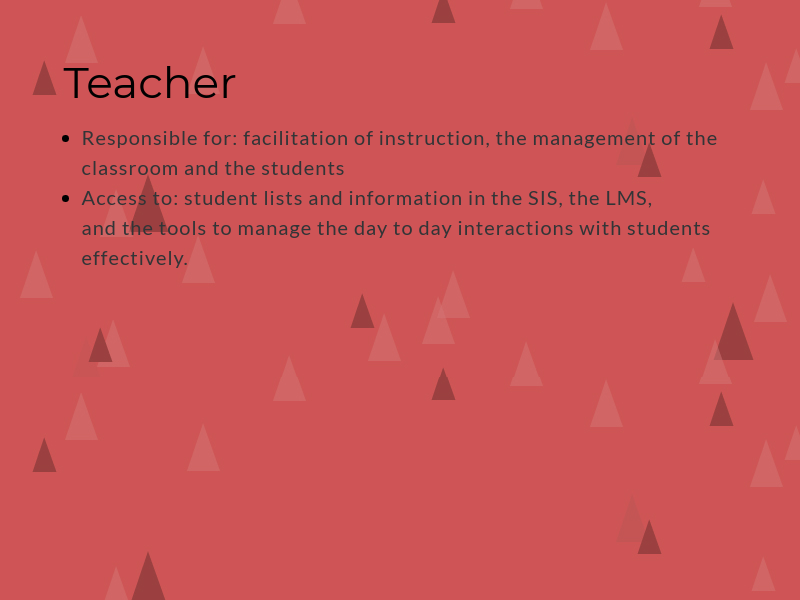
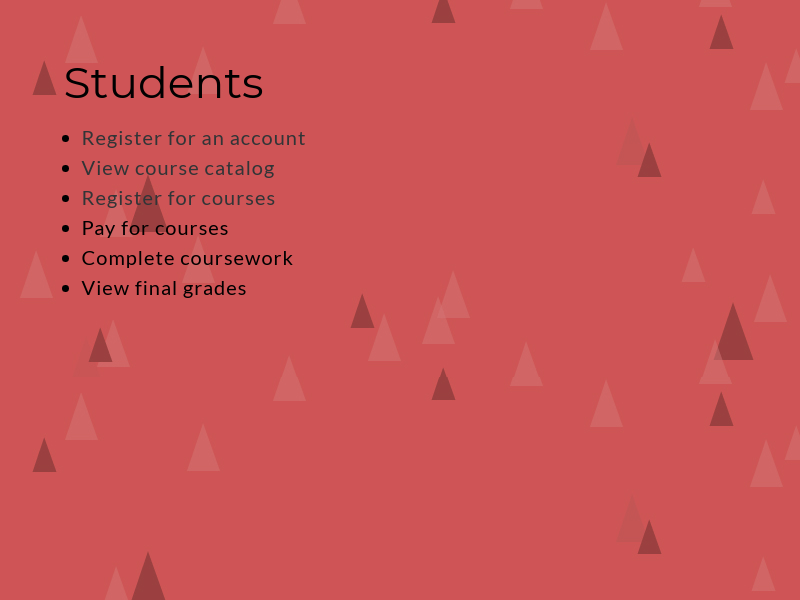
Explore: Consider the role of teacher, facilitator, course developer, instructional administrator and LMS administrator. Explore the various roles and responsibilities within the online learning community.

Create: Using the information from this lesson, create a digital resource that highlights the various roles in a learning management system.

Artifact: The created, finished product may come in one or more of the following forms: a digital chart/poster/info-graphic, an audio recording or podcast, a digital slideshow, or a digital video.

https://create.piktochart.com/output/39836103-untitled-presentation

Navigate 3- LMS Tool Categories

Explore: Identify the major tool categories in Learning Management Systems.

Answer: What are the most relevant features offered within an LMS?  Which features directly relate to effective online instruction?  How might you use these features in the online classroom environment?

Tools 

  1. Organization level announcements
  2. Blogs – private space for users used as a reflection tool, users can get comments from outside of the LMS
  3. Journals – area to write a narrative
  4. Glossary – defines common terms or acronyms used throughout the course
  5. E-mail – this is often used as an internal function between instructor and student or student to student

Teacher information consists of class lists (listing of those enrolled in the coarse), the calendar (a list of class deadlines and special events), and the bulletin board/class news (provides news for about the course the students are enrolled in).

Course Administration consists of the course home (components that organize the information in different sections) and the syllabus (handbook policy reminders, teacher content information, course description, course standards, grading categories, and assignment schedule).

Course Content and LOR consist of import/export options (the ability to move content in and out of the course), course authoring (can be built by using LMS built-in tools or other external tools), course packages (these are  programmed set of rules that allows a learner to “go through” a course and can be imported and exported to and from LMS’s), learning object repository (the place in which all learning resources are stored managed and shared).

Course Assessments consist of tests and quizzes, rubrics, and dropbox. Instructors must be able to assess students work efficiently and effectively.

Communication consists of email (an option inside the LMS where teachers and students can exchange digital messages) and discussion boards (which encourage student interaction). The following are the common communication tools in LMSs: email, notifications, discussions, instant messaging, blogs, social profiles, calendars, and agents.

Grades/Gradebook consists of feedback and progress for the learner. Grade books can be set up various ways, depending on how the instructor is comfortable and what best serves the learner.

Navigate 3 – LMS Reporting

Explore: Identify the major tool categories in Learning Management Systems.

Answer: What are the most relevant features offered within an LMS?  Which features directly relate to effective online instruction?  How might you use these features in the online classroom environment?

Tools 

  1. Organization level announcements
  2. Blogs – private space for users used as a reflection tool, users can get comments from outside of the LMS
  3. Journals – area to write a narrative
  4. Glossary – defines common terms or acronyms used throughout the course
  5. E-mail – this is often used as an internal function between instructor and student or student to student

The most relevant features of an LMS are the collaboration tools. The ability for the learner to collaborate with peers and the instructor is invaluable. Otherwise online learning becomes extremely isolating. More than this, collaborating allows them to grow far more than they would without the collaboration.

Collaboration can come in many forms, such as: discussion boards, online chats (one-to-one or group chats), blogs/journals/wikis, messaging, and user groups.

Navigate 2 – LMS Trends

Explore: Research trends in digital learning and select the trend that will make the most impact on digital learning over the next five years.

Answer: Which trend did you select? How do you foresee this trend impacting online learning?  Will this trend be a learning fad or will it become an essential part of online learning in the future? Explain.

A big trend in digital learning is social learning. Spellman-Cann, Luong, Hendricks, and Roberts define social presence as “the ability of learners to project their personal characteristics into the community of inquiry, thereby presenting themselves as ‘real people’’ (Garrison, Anderson & Archer, 1999, p. 89). It also refers to participants’ ability to engage meaningfully in a community, through developing interpersonal relationships that allow them to communicate openly and freely.” Social learning is even more important in an online setting to avoid isolation in the learner. They must collaborate between individuals through various modes, such as forums, informal chat sessions, sharing sessions, and learning circles. 

As online learning becomes more popular through LMS, the need to find ways for students to become social learners is more important than ever this trend will increase.

Navigate 2 – Tools for Deciding on an LMS

Explore: Which LMS is best?  Consolidate the information about open and commercial LMS presented in this lesson.  Select your favorite LMS.

Answer: Which LMS is best? How does the selected LMS meet the needs of all stakeholders, including administrators, students, teachers and faculty, instructional technology, development, support, and parents? How does the selected LMS align with the initiatives, growth, and technological needs of your organization?

The LMS I have chosen as best is Moodle, which is a free LMS unlike some of the others that are paid for. This system would work best to meets the needs of all stakeholders at my present school, by helping teachers become students centered, collaborative and technology driven.

I believe that Moodle would also make PD effortless, by being able to offer synchronous and asynchronous PD depending on teacher preference.  Administrators would also be able to keep track of who is turning grades or other important paper work – helping to keep others accountable.

Moodle would align with the school and district initiatives of individual learning and PLCs. Moodle would allow you to give a particular assignment to an entire class(es) or just a particular student or set of students. This would also be helpful in sharing with a PLC.